Non-surgical · Calabasas · Functional neurology
Concussion Treatment
in Calabasas
An invisible injury deserves a visible plan.
If you searched for a concussion specialist near me because symptoms after a head injury have not settled, this is what care looks like in Calabasas. At California Brain & Spine Center, Dr. Alireza Chizari, DC, DACNB, a Board-Certified Functional Neurologist, builds a non-surgical rehabilitation plan around what your evaluation shows, working alongside your primary care provider and medical neurology.
The hidden injury
Most concussions don't look like injuries
There is no cast, scar or visible bruise, just headaches that keep returning, a fog that follows you into every meeting, and a worry that something is not right.
According to the CDC, a concussion is a type of traumatic brain injury caused by a bump, blow or jolt to the head, or by a hit to the body that moves the head and brain rapidly back and forth. It can follow a tackle on the field or a minor car collision, and people come to our Calabasas clinic from Agoura Hills and across Los Angeles.
Book a Complimentary Consultation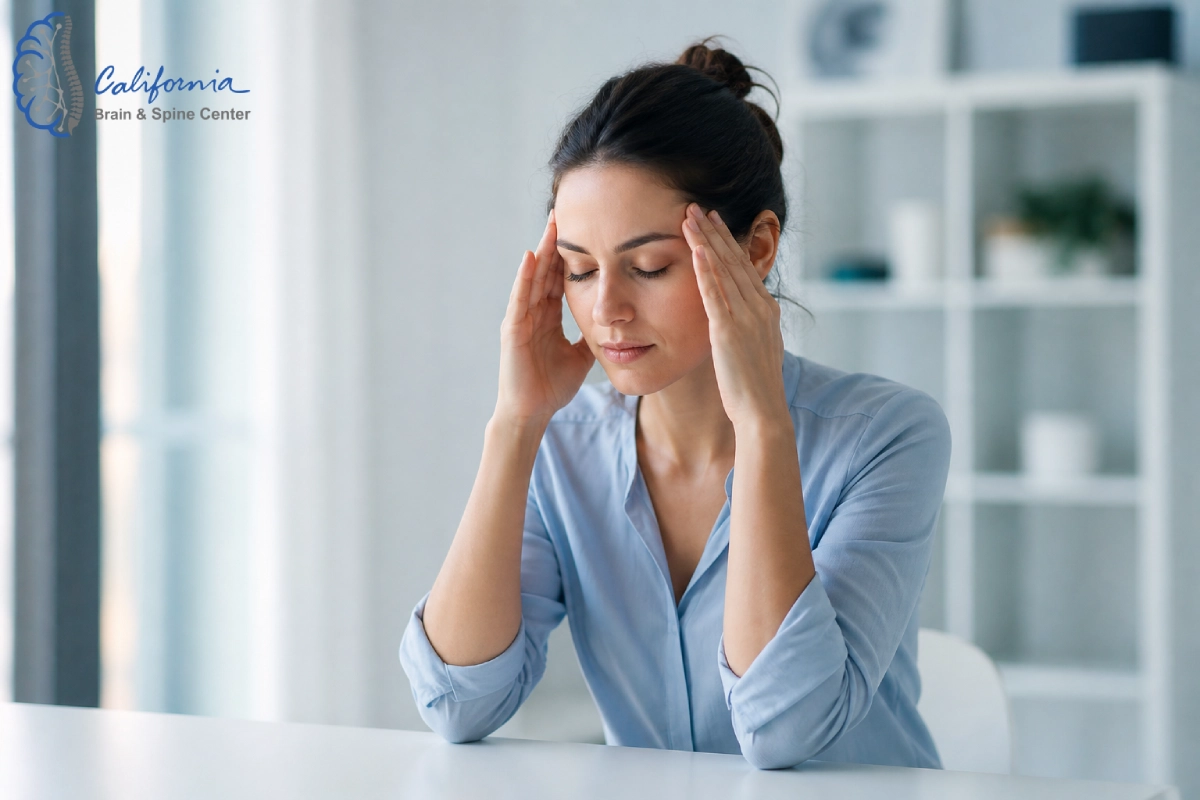
Understanding Concussions
The six ways a concussion shows up
According to the CDC, concussion symptoms can be physical, cognitive, emotional or sleep-related. The evaluation sorts them into six groups so rehabilitation can target the systems involved, not only the headache.
Visual
Blurred or double vision, light sensitivity, and eye strain on screens.
Vestibular
The inner-ear balance system: dizziness, vertigo, balance and walking problems, and nausea with head movement.
Proprioceptive
Headaches and unsteady footing, which the evaluation checks alongside neck movement and body-position sense.
Autonomic
The automatic system behind heart rate and blood pressure: fatigue, sleep changes and, in some people, a racing heart or lightheadedness when standing.
Cognitive
Brain fog, slow processing, memory lapses, and difficulty concentrating on tasks that once felt simple.
Emotional
Irritability, anxiety, sadness or low mood, and reactions that feel bigger than usual.
By the numbers
How long concussion symptoms usually last
- According to the CDC, most people with a mild TBI or concussion feel better within a couple of weeks, though it varies from person to person.
- The CDC reports that most children with a concussion feel better within 2 to 4 weeks.
- The Amsterdam consensus on sport-related concussion defines symptoms lasting more than four weeks, at any age, as persisting symptoms.
- If symptoms last longer than a few weeks, keep getting worse, or new ones appear, an evaluation is worth arranging.
Our approach
Concussion treatment in Calabasas, without surgery
Care here is non-surgical and rehabilitation-based, an alternative brain injury therapy in Los Angeles that works alongside primary care, medical neurology and physical therapists rather than replacing them.
Low-risk care
Non-surgical, non-medication care. Medication questions go to your primary care provider or medical neurology.
Function-focused
Rehabilitation may include exercises for balance, vision and attention, chosen for the daily tasks you are finding hard.
Personalised
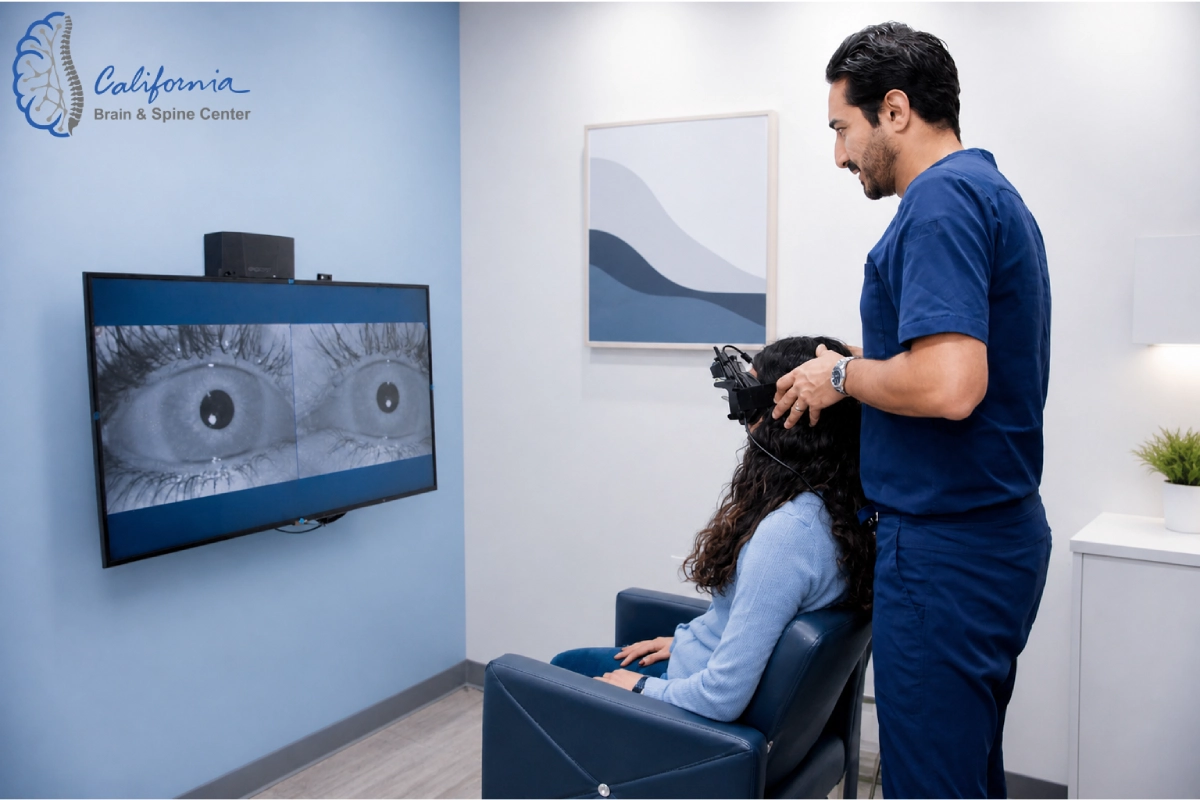
Every plan starts with the 120-minute neurodiagnostic assessment: a neurological examination, balance and gait testing, eye-movement testing and cognitive screening.
Coordinated care
Dr. Chizari works alongside primary care, medical neurology and physical therapists, and refers you for imaging when the exam calls for it.
Inside the program
Treatments that match the symptom
After the evaluation, care may include the following, when clinically appropriate:
Questions I hear
What patients often ask me
One question parents often ask me is whether their child should rest in a dark room until every symptom is gone. Current consensus on sport-related concussion recommends relative rather than strict rest for the first 48 hours, including less screen time, then light activity such as walking, as long as it does not bring symptoms on or make them worse.
Another question patients often ask me is whether a racing heart or lightheadedness on standing can be connected to a concussion. Research associates sport-related concussion with autonomic changes in some people, and a meta-analysis found lower resting heart rate variability after concussion that may outlast other symptoms, which is why the evaluation looks at the autonomic system as well.
Watch
What happens at your first visit
Intake, neurological screening and the first steps of care, so you know what to expect.
Common questions
Frequently asked questions
How soon should I see a concussion specialist after a head injury?
With danger signs, immediately, and not at a clinic. If symptoms come on suddenly or severely - a sudden severe headache, weakness, trouble speaking, vision loss, or fainting - that is an emergency. Call 911 or go to an emergency room, not a clinic appointment. The CDC's danger signs after a head injury also include a headache that gets worse and does not go away, repeated vomiting, slurred speech, one pupil larger than the other, confusion or agitation, seizures and loss of consciousness. Without danger signs, symptoms that last more than a few weeks, get worse, or keep you from school or work are worth an evaluation; read more on post-concussion red flags.
Do I need a referral for concussion treatment in Calabasas?
No referral is needed. You can book directly with California Brain & Spine Center, and Dr. Chizari coordinates with your primary care provider or physician afterward so your care stays connected.
Will I need an MRI or CT scan?
Imaging decisions after a head injury sit with medical care. When the examination or any danger sign suggests a scan is needed, Dr. Chizari refers you to your physician, the emergency department or medical neurology. The functional neurology assessment looks at how balance, eye movement and thinking are working.
How long does post-concussion syndrome last?
It varies. According to the CDC, most people with a concussion feel better within a couple of weeks and most children within 2 to 4 weeks. Current consensus calls symptoms beyond four weeks persisting symptoms, a reasonable point to arrange an evaluation. More on post-concussion syndrome and mild TBI.
Can a concussion be treated without surgery?
Everything offered at our Calabasas clinic is non-surgical. After the evaluation, care may include vestibular rehabilitation, eye-movement exercises, cognitive exercises and a graded return to activity, when clinically appropriate. A head injury with danger signs needs emergency medical care first.
Is there a concussion doctor near me if I live outside Calabasas?
The clinic is in Calabasas on the 101 corridor, and many people come from across Los Angeles, including West Los Angeles. If you live farther away, for example in Costa Mesa, call (818) 649-5300 first to talk through whether the trip makes sense for a first evaluation.
Take the next step
Your next step after
a concussion.
If you have been searching for a concussion specialist near me, the Calabasas clinic serves Agoura Hills, Woodland Hills and the wider Los Angeles area. Book a complimentary consultation with Dr. Chizari to talk through your symptoms and the 120-minute assessment.
California Brain & Spine Center · 4768 Park Granada, Ste 107, Calabasas, CA 91302
This content is for educational purposes only and is not medical advice. Consult a qualified healthcare provider about your specific situation.