Non-drug · Non-invasive · Calabasas
Headache and Migraine Treatment
In Calabasas
Living in fear of the next attack is not living.
The stabbing pain behind your eyes, the throbbing temples, the lights you can't bear: chronic headaches can take over your focus, your relationships and your plans. At California Brain & Spine Center, headache and migraine treatment in Calabasas starts with Dr. Alireza Chizari, DC, DACNB, a Board-Certified Functional Neurologist, who works to identify what is driving your headaches, not just the symptoms.
The root cause
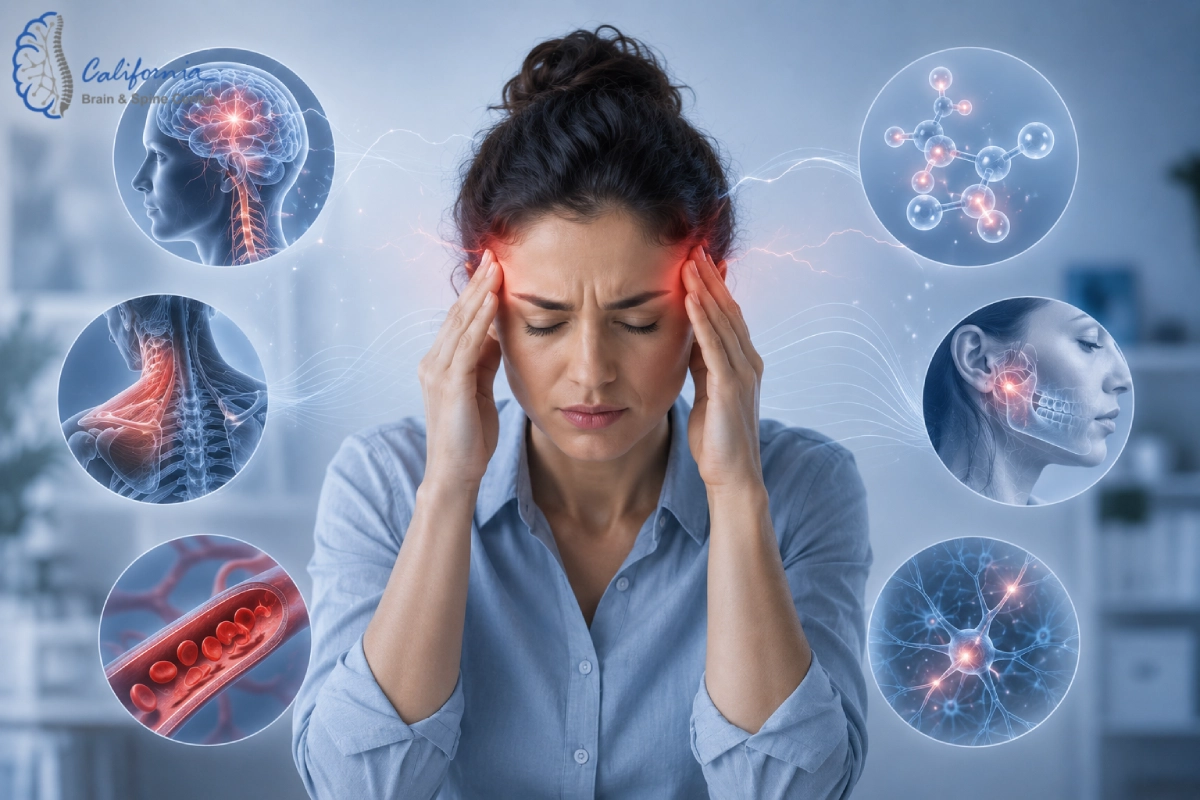
Headaches are neurological events, not just pain
Migraine is a recurring type of headache. The pain is often throbbing and may come with nausea and sensitivity to light and sound. Other headaches are referred from the neck, and some are sustained by frequent use of headache medication. No two patients share the same combination.
If you have been searching for a migraine specialist in California, it helps to know what this practice does. Dr. Chizari's evaluation starts with a detailed history and a neurological exam, and looks at which of these patterns fits yours, because each calls for a different plan. Patients come from Calabasas, Agoura Hills and Thousand Oaks, and from across the Los Angeles area.
Start your evaluation →Understanding headaches
Headache and migraine types we treat in Calabasas
"Headache" is a symptom with very different causes, and the right plan depends on which type is yours. Identifying it correctly is step one.
Migraine
Recurring, often throbbing pain that may come with nausea and sensitivity to light and sound
Tension Headache
Cervicogenic Headache
Head pain caused by a problem in the neck, which can be mistaken for migraine (Cleveland Clinic)
Cluster Headache
Trigeminal Neuralgia
Post-Traumatic Headache
Headaches that begin after a concussion, traumatic brain injury (TBI) or whiplash
If your headaches started after a head impact, see our concussion treatment program and post-concussion syndrome care.
Why it keeps coming back
Migraine triggers are personal, and finding yours matters
Triggers differ between people and can include stress, hormonal changes, lights, sounds, smells, sleep changes and sudden changes in weather. Part of your evaluation is mapping which of these show up in your pattern.
By the numbers
A global burden, hiding in plain sight
- The WHO estimates that headache disorders affect approximately 40% of people worldwide (World Health Organization)
- A migraine attack usually lasts 4 to 72 hours, and the condition is often life-long
- Triggers differ from person to person, which is why a personal trigger map matters
- Frequent use of headache medication can itself sustain headaches; any change is a decision for your prescribing physician
Your path out of the cycle
How headache treatment works at our Calabasas clinic
A root-cause approach in three stages, built around your specific headache type and triggers, not a one-size-fits-all protocol.
Diagnosis & headache profiling
The 120-minute neurodiagnostic assessment starts with a detailed history and a neurological exam, with visual or vestibular testing where needed. Imaging, when needed, is ordered through medical care to rule out other causes.
Customized, non-drug care
When clinically appropriate after evaluation, Dr. Chizari's plan may include neurological retraining, postural work, trigger modification, and vestibular rehabilitation when migraines come with dizziness (PMC review).
Monitoring & ongoing adjustment
Ongoing check-ins track how you respond, and the plan changes with you. Migraine is often life-long, so care aims to reduce how often attacks happen and how much they disrupt your life.
Inside the program
Therapies that may calm overactive pain pathways
Depending on your headache profile, your plan may combine:
Know the difference
Headaches we treat, and when to go to the ER first
A few warning signs need emergency care before anything else, not a clinic appointment.
We evaluate symptoms like these
- Throbbing or pulsating head pain
- Pressure behind the eyes or in the temples
- Sensitivity to light, sound, or smells
- Aura or visual disturbances
- Nausea, dizziness, or light-headedness with headaches
- Brain fog or slowed thinking during or after an episode
- Neck stiffness and tension-type pain
If you live in fear of the next attack, a functional neurological evaluation is designed to look at what may be driving it. No referral needed.
Call 911 or go to the ER first if a headache is
- Started suddenly and is extremely painful
- Paired with numbness, weakness, or difficulty speaking
- Paired with loss of vision
- Paired with a seizure, drowsiness, or confusion
If symptoms come on suddenly or severely - a sudden severe headache, weakness, trouble speaking, vision loss, or fainting - that is an emergency. Call 911 or go to an emergency room, not a clinic appointment. Once you have been cleared, we can help you look at what remains.
Patient stories
Patient experiences with chronic pain
Dr. Chizari treated me as a whole person, not just a diagnosis.
Patient names withheld for privacy and shared with permission. Individual results vary and are not typical of every patient. No specific outcome is promised.
Watch
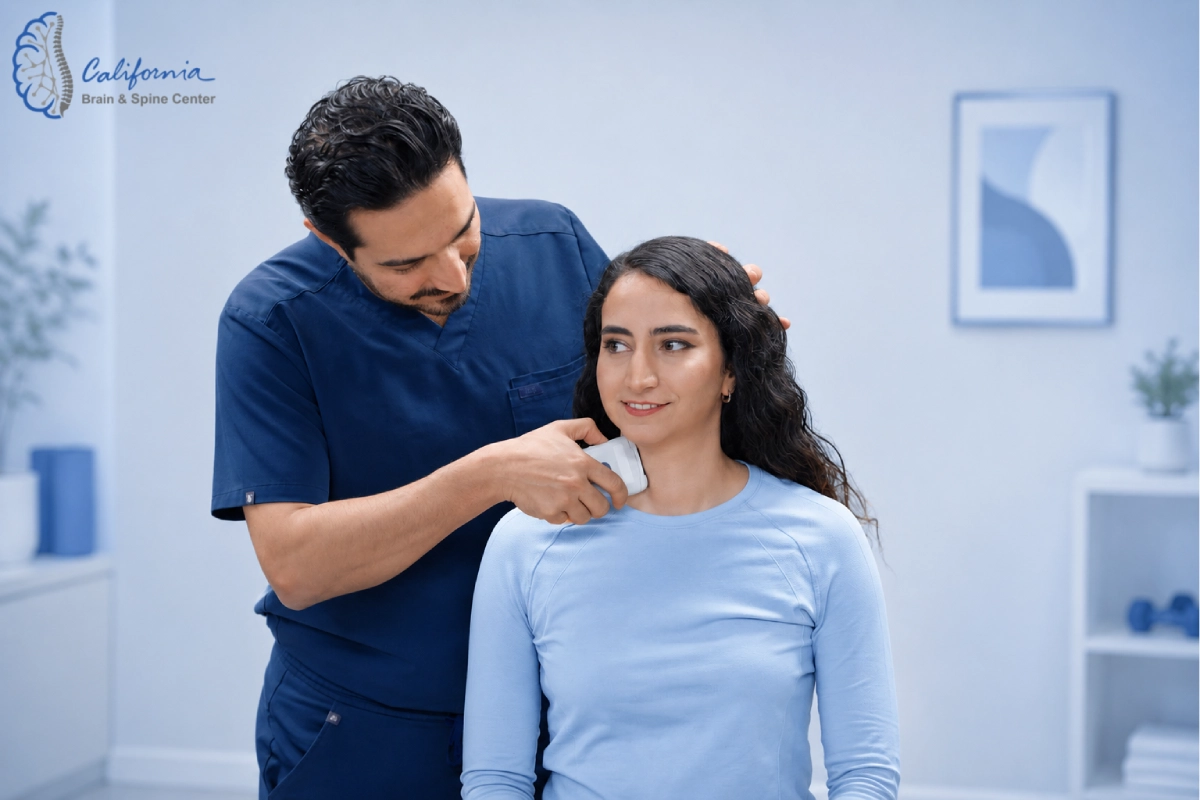
Break the cycle: see how GammaCore works
In this one-minute clip, see how non-invasive vagus nerve stimulation works. It is an FDA-cleared option for migraine that may be considered when clinically appropriate, alongside the care you already receive.
Common questions
Frequently asked questions
What's the difference between a tension headache and a migraine?
Migraine is a recurring type of headache, and the pain is often throbbing and may come with nausea and sensitivity to light and sound (MedlinePlus). Because neck-related headaches can be mistaken for migraine or tension headache, telling them apart is part of Dr. Chizari's headache and migraine evaluation.
How many migraine days per month means I need specialist care?
There is no single number. If headaches come often, keep getting worse, disrupt work or sleep, or you are taking headache medication most days, it is worth an evaluation. Frequent use of headache medication can itself sustain headaches, and any change to medication is a decision for your prescribing physician.
Can migraines really be treated without medication?
Migraine is often life-long, so care aims to reduce how often attacks happen and how much they disrupt life. For many people, non-drug headache and migraine treatment is one part of that, and it can sit alongside any medical care you already receive. Read more about non-drug options for migraines and dizziness.
What are the most common migraine triggers, and how do I track mine?
Triggers differ between people and can include stress, hormonal changes, lights, sounds, smells, sleep changes and weather. A daily headache diary helps you spot your own pattern, and regular sleep and meals are commonly recommended. Regular aerobic exercise may also reduce migraine days for some people, though the effect in studies is modest (J Headache Pain).
How long does a migraine attack last?
According to the World Health Organization, a migraine attack usually lasts 4 to 72 hours, and the condition is often life-long. How long your own attacks last, and how often they come, varies from person to person. If headaches are becoming more frequent or changing pattern, a migraine evaluation is worth booking. The emergency signs are listed above.
Where can I find a migraine specialist in Calabasas?
California Brain & Spine Center is a functional neurology clinic in Calabasas on the 101 corridor, a short drive from Thousand Oaks, Woodland Hills and the wider Los Angeles area. Dr. Chizari profiles your headaches before building a migraine treatment plan, and for prescription treatment, he coordinates with your medical neurologist or primary care provider.
Take the next step
Don't give headaches
one more day of your life.
Headache and migraine treatment in Calabasas starts with a 120-minute neurodiagnostic assessment. Dr. Chizari works to find what may be driving your migraine pattern and builds a plan around it, alongside your primary care provider or physician.
California Brain & Spine Center · 4768 Park Granada, Ste 107, Calabasas, CA 91302
This content is for educational purposes only and is not medical advice. Consult a qualified healthcare provider about your specific situation.